

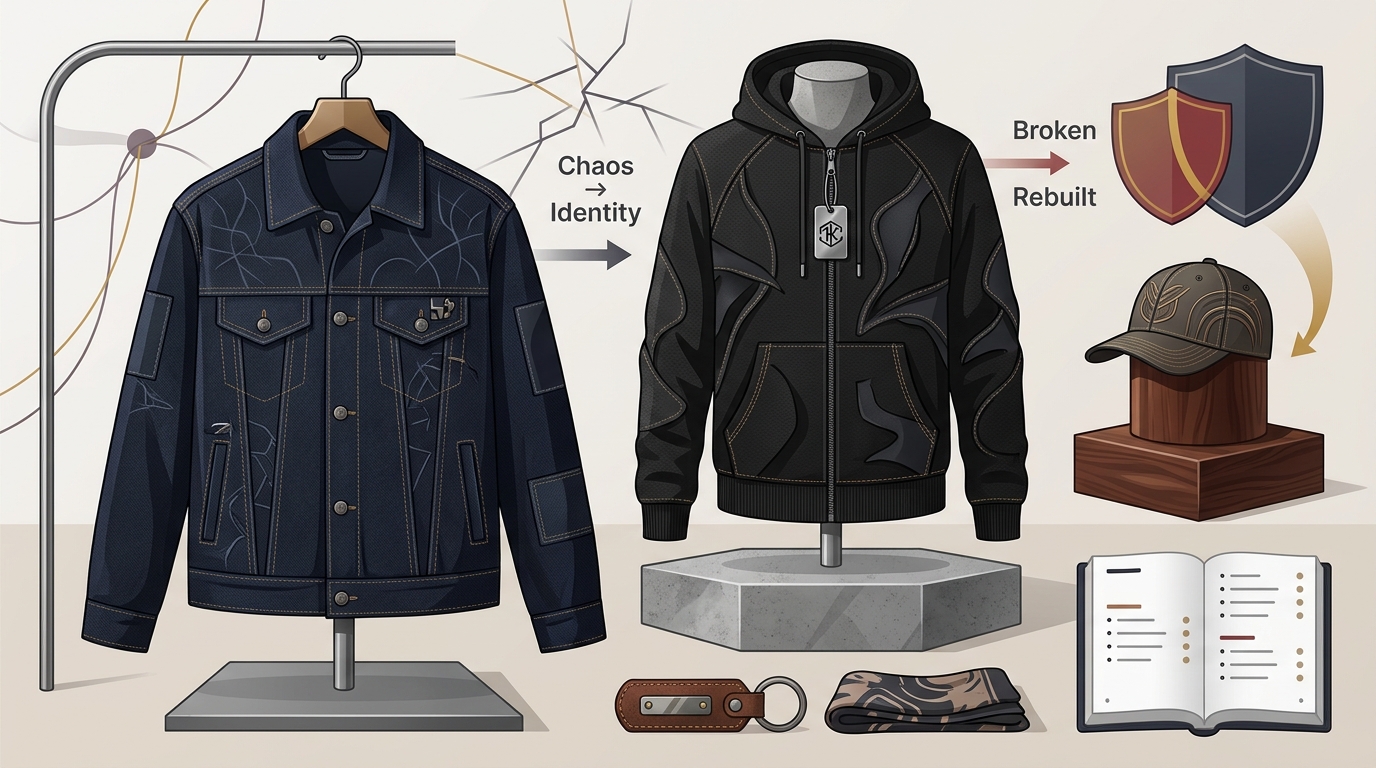
Luxury streetwear communicates identity by transforming personal survival into visible, wearable symbols of resilience. For people rebuilding their lives, these garments act as emotional armor, signaling that they are not defined by their past chaos but by their strength. Threads of Kaos positions this approach as a movement for identity reclamation, where clothing serves as a bridge between individual struggle and collective belonging.
The Symbolic Language of Resilience
Streetwear has evolved from subcultural rebellion into a sophisticated medium for personal narrative. In the context of rebuilding, luxury streetwear uses specific design elements to communicate that a person has survived difficult circumstances. This is not about hiding the past, but about framing it as a source of strength. The visual language of these garments often includes heavy fabrics, distressed textures, and deliberate imperfections that mirror the process of healing. For additional details, review the Contact Us Threads of.
Threads of Kaos utilizes a specific symbol language known as the Sigils of Kaos to convey these themes. A sigil is a private mark that represents a stage in the rebuilding process, allowing wearers to communicate their journey without words. For example, the Crown Sigil represents authority and ascension, signaling that the wearer has earned their place through struggle rather than privilege. This symbolic approach allows individuals to express complex emotional states through fashion, creating a shared vocabulary among those who have experienced similar challenges.
From Isolation to Community Belonging
Rebuilding a life often involves a period of intense isolation, where individuals feel disconnected from mainstream society. Luxury streetwear addresses this by creating a visual tribe. When people wear garments that reflect their specific type of resilience, they signal to others that they share a common understanding of hardship and recovery. This visual recognition fosters a sense of belonging that is often missing in traditional social structures. For additional details, review the The Founder Story Belinda.
The concept of the